By Esther Williams

Ep 191: Why Your Compost Is Not Breaking Down – The Messed Up Gardener
Most people think they need hundreds — sometimes thousands — of dollars to start a proper vegetable garden.
But what if that wasn’t true?
What if you could build a garden for $100 that doesn’t just look good… but actually starts reducing your grocery bill?
Because here’s the reality: most gardens fail to deliver real value — not because people lack effort, but because they’re built the wrong way from the start.
The Real Problem With Most Gardens
Most gardeners don’t fail because they lack passion.
They fail because they:
- Spend money in the wrong places
- Start too big
- Focus on the wrong crops
Before they know it, they’ve spent $300–$500… and still aren’t seeing meaningful results.
That’s where this approach is different.
This isn’t about building a perfect garden.
It’s about building a working garden.
How to Build a $100 Garden That Actually Works
If you only have $100, every dollar needs to count.
A simple breakdown looks like this:
- $50–$60 → Soil
- $15–$20 → Seeds and a few key seedlings
- $0–$20 → Containers (ideally recycled)
- $10 → Buffer
That buffer matters more than most people realise.
Gardening is unpredictable. Things fail, conditions change, and small adjustments are always needed. If you spend everything upfront, your garden stalls. If you keep a little flexibility, your garden keeps moving.
The Shift That Changes Everything
Before choosing what to grow, you need to change how you think.
Instead of asking:
“What should I grow?”
Ask:
“What do I spend the most money on every week?”
Because if you get this wrong, your garden might look productive… but it won’t actually save you money.
The $100 Garden Rule
Every dollar must contribute to food.
Not aesthetics.
Not perfection.
👉 Output.
Step 1: Skip the Expensive Setup
You don’t need raised beds to start.
In fact, on a $100 budget, they can completely drain your resources.
Instead, use:
- Buckets
- Storage bins
- Repurposed containers
As long as you have:
- Drainage
- Depth
- Sunlight
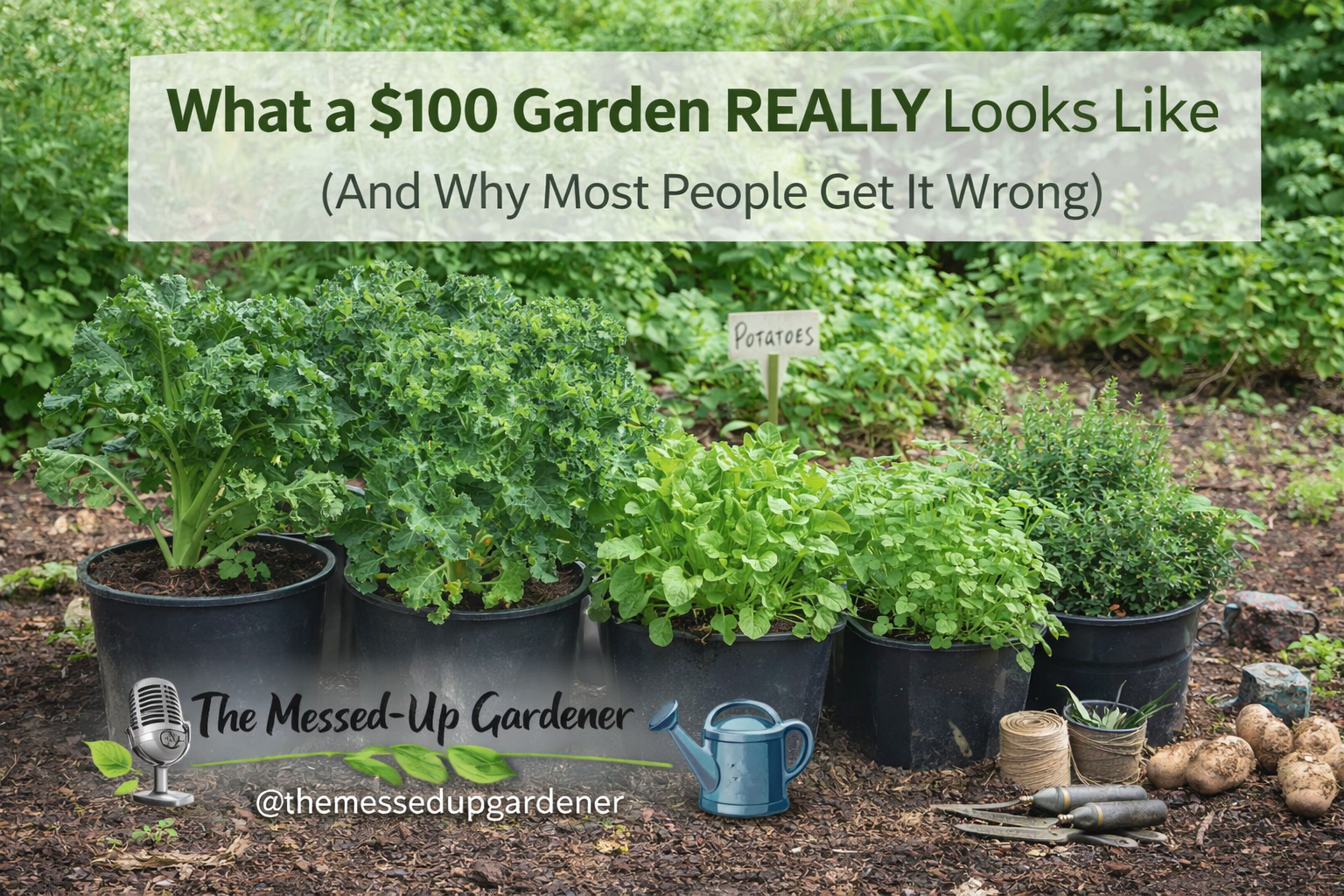
You can create 5–10 growing spaces for very little — or nothing at all.
Step 2: Invest in Soil
Soil is your system.
Bad soil leads to weak plants and inconsistent results. Good soil creates reliability.
Focus your budget here using:
- Basic potting mix
- Compost
- Simple blends
Every healthy plant you grow protects your investment.
Step 3: Mix Seeds and Seedlings
Seedlings give you a head start. Seeds give you scale.
A smart approach is:
- Buy 2–3 key seedlings
- Grow everything else from seed
This stretches your budget while still building early confidence.
Step 4: Grow the Right Crops (This Is Everything)
Not all crops are equal.
Some crops give you a little back.
Others quietly carry your entire garden.
High-ROI Crops (Your Foundation)
- Silverbeet
- Kale
- Perpetual spinach
- Zucchini
These produce repeatedly and replace real grocery spend.
Medium-ROI Crops
- Tomatoes
- Beans
- Capsicum
Useful, but more seasonal.
Low-ROI Crops
- Lettuce
- Radishes
- Some herbs
Still valuable — but they don’t significantly reduce your grocery bill.
👉 The key insight:
A small amount of the right crops will always outperform a large amount of the wrong ones.
A Simple Way to Start
Don’t change everything at once.
Next time you shop, pick one item you buy every week… and grow that.
That’s where it starts.
Structuring Your $100 Garden
A simple, effective layout includes:
- Staple crops (potatoes, kumara, onions)
- Repeat harvest crops (greens like kale and silverbeet)
- High-value crops (herbs and salad greens)
- Fast-growing crops (for early confidence)
This creates a balanced system that produces consistently.

The Biggest Mistake to Avoid
Trying to grow everything.
When everything gets a little attention, nothing performs well.
Focus increases output. And output is what matters.
Protecting Your Investment
Every failed plant is:
- Lost money
- Lost time
- Lost momentum
Most failures come from simple issues:
- Overwatering
- Poor drainage
- Bad timing
The goal isn’t perfection — it’s reducing risk.
Because protecting what you grow is just as important as growing it.
What Happens in the First 90 Days
The first month is about:
- Establishing
- Learning
- Adjusting
You won’t see much harvest yet — but your system is building.
By months two and three, things shift:
- Greens become usable
- Crops begin producing
- Small returns start showing up
And that’s when your mindset changes.
You stop asking:
“What should I buy?”
And start asking:
“What do I already have growing?”
Turning Your Garden Into Real Savings
A small $100 garden can realistically provide:
- Greens for multiple meals each week
- Fresh herbs daily
- Occasional extra produce
That might only replace $10–$20 per week…
But it adds up.
And more importantly, it changes behaviour:
- You waste less
- You buy more intentionally
- You use what you grow
Why Gardens Actually Save Money Over Time
Gardens don’t deliver instant returns.
They compound.
Once established, they continue producing. And over time, those small, consistent outputs become meaningful.
Is It Worth the Time?
This is the real question.
Gardening takes effort. It takes consistency.
But the return doesn’t just come from what you grow.
It comes from what you stop wasting.
Because most food waste doesn’t happen in the garden.
It happens in the kitchen.
The Upgrade Path
A $100 garden is not the end goal.
It’s the starting point.
Once it works, you build on it:
- Add containers
- Improve soil
- Expand high-value crops
Over time, your system grows — without needing a large upfront investment.
The Real Shift
At some point, something changes.
You stop managing your garden…
and start designing it.
That’s the difference between:
- reacting
and - building a system that works for you
Final Thought
A productive garden doesn’t start with more space, more money, or more complexity.
It starts with one decision.
One container.
One crop.
One small shift.
And over time, those small decisions turn into something that actually supports your everyday life.
If this got you thinking, share it with someone who feels like gardening is too expensive to start.
Because sometimes…
👉 it’s not about having more
👉 it’s about using what you already have — better
Until next time, remember:
Gardening can happen in any space, in any place, and on any budget. 🌿
Have an incredibly abundant week — and I’ll buzz you later.
Esther Williams
The Messed-Up Gardener
Leave a Reply