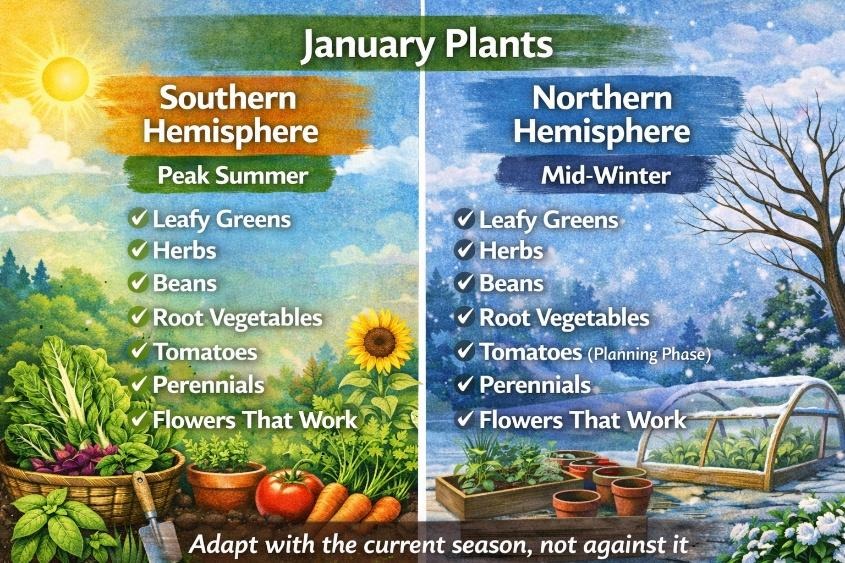
Back to Basics — The Most Reliable Plants for This Month, Wherever You Live

Ep 160: What to Plant in January: Back to Basics — The Most Reliable Plants for This Month, Wherever You Live – The Messed Up Gardener
January is one of those months that sounds simple on paper.
New year. Fresh start. Clean slate.
But in reality, January gardening can feel confusing, overwhelming, and honestly a bit exhausting — especially when you’re heading back to work after holidays that were far too short.
Here in New Zealand, we’ve been dealing with ridiculous temperatures. Our orchard weather station hit 35°C, which is just wild. Between potting up dahlias and foliage plants for floral bouquets and managing a passion vine hopper explosion in the orchard, it’s been one of those “if it’s not one thing, it’s another” weeks. The sprayer’s been through, so fingers crossed that helps reduce hopper numbers and the risk of sooty mould on our kiwifruit.
And that’s exactly why this episode — and this blog — is deliberately simple.
Because January doesn’t need more pressure.
It needs clarity.
Today we’re going back to basics.
I’m walking you through seven solid, reliable plants you can plant in January, in both hemispheres, without chasing perfection, rare varieties, or complicated systems.
These are plants that earn their place in the garden because they’re useful, forgiving, and flexible.
And just to be clear — this is not about planting everything on the list.
It’s about choosing one or two things that fit your space, your climate, and your energy level right now.
So let’s slow this down, take the pressure off, and start with the big picture.
January Gardening: A Quick Reset
January gardening is not about pushing growth at all costs.
It’s about working with the season you’re actually in — not the one you wish you were in.
- Southern Hemisphere: January is peak summer.
Heat stress is real. Water matters more than plant volume. Simpler is better. - Northern Hemisphere: January is about preparation, protection, and quiet progress.
Growth is slow, but foundations matter.
Rather than splitting this guide into “summer” and “winter,” we’re going to look at plant categories — and how each one works in both hemispheres. That way, you can adapt the ideas instead of translating them.
But before we go any further, there’s something important that needs to be said.

Why January Planting Feels Hard (And Why That’s Normal)
January planting often feels harder than it “should.”
And that’s not because you’re doing anything wrong.
January sits in an awkward space mentally and physically. The calendar says fresh start, but your body often says I’m still recovering.
- In the Southern Hemisphere, you’re dealing with heat, glare, evaporation, and fatigue.
- In the Northern Hemisphere, you’re dealing with cold, short days, and slow feedback from the garden.
Either way, January doesn’t give you quick wins unless you choose them deliberately.
That’s why so many gardeners (myself included):
- stare at seed packets and feel overwhelmed
- buy plants and then don’t plant them
- decide to “wait until next month” and lose momentum entirely
Nothing is wrong with you.
January requires a different mindset.
This month is less about expansion and more about alignment.
Ask yourself:
- What can survive my current energy?
- What will still matter in four weeks?
- What reduces future work instead of creating more?
When you plant with those questions in mind, January becomes calmer, steadier, and far more rewarding.
If you’re unsure what to plant right now, you’re exactly where you need to be.
Alright — let’s get into the list.
Plant One: Leafy Greens (Yes, Even in January)
Leafy greens earn their place almost every month of the year.
They’re fast, flexible, and incredibly forgiving.
Southern Hemisphere (Summer January)
Focus on variety choice and placement:
- heat-tolerant lettuce
- silverbeet
- perpetual spinach
- rocket
- Asian greens like pak choi or mizuna (with shade)
Tips:
- plant in partial shade
- mulch generously
- water deeply, not constantly
- accept slower growth
You’re not aiming for picture-perfect leaves — you’re aiming for edible ones.
Northern Hemisphere (Winter January)
This is mostly an indoor or protected job:
- seed trays indoors
- cut-and-come-again greens on windowsills
- cold frames or greenhouses
January-started greens give you a head start for early spring.
Momentum matters more than volume. Even a small tray counts.
Plant Two: Herbs (The Quiet Overachievers)
Herbs punch well above their weight.
They:
- take up very little space
- tolerate imperfect care
- provide ongoing harvests
- make meals feel intentional
Southern Hemisphere
Great January options include:
- basil
- parsley
- coriander (with shade)
- chives
- oregano
Plant them close to the house — the more you see them, the more you use them.
Heat tip: mulch early. Herbs hate drying out completely.
Northern Hemisphere
Indoors is the name of the game:
- seed trays on windowsills
- basil and parsley inside
- overwinter hardy herbs like thyme and rosemary
Even one pot is a win. This is about habit, not abundance.
Plant Three: Beans (A Confidence Builder)
Beans are generous plants.
They don’t need much.
They fix nitrogen.
And they’re very honest when something’s wrong.
Southern Hemisphere
January is still good for:
- dwarf beans
- climbing beans (with enough water)
They’re ideal if you want quick results without complexity.
Northern Hemisphere
This is a planning and starting phase:
- map out layouts
- prepare supports
- start early seedlings indoors
January groundwork saves effort later.
Plant Four: Root Vegetables (Slow, Steady, Reliable)
Root crops don’t rush — and that’s their strength.
Southern Hemisphere
January works well for:
- carrots (short varieties)
- beetroot
- radishes
- turnips
Focus on:
- loose soil
- even moisture
- patience (something I still work on)
Root crops do better with less interference.
Northern Hemisphere
This is about:
- soil prep where ground isn’t frozen
- planning rotations
- starting radishes indoors
Roots teach restraint. You don’t rush them — you support them.
The January Soil Check (Most People Skip This)
Before planting anything else, pause and check your soil.
Not testing.
Not perfect amending.
Just noticing.
Check three things:
1. Moisture
Grab a handful:
- dusty = too dry
- sticky = too wet
- holds shape then crumbles = good
2. Temperature
Use your hand:
- very hot = stress
- icy cold = stalled growth
- neutral = ideal
3. Structure
If roots will struggle, choose:
- shallow-rooted plants
- containers
- raised areas
January is not the month to force plants into bad soil.
Work with what you’ve got.
Plant Five: Tomatoes (With Realistic Expectations)
Tomatoes are emotional plants. People project a lot onto them.
Let’s stay practical.
Southern Hemisphere
January planting only works if:
- you have a long, warm season
- you choose fast-maturing varieties
- water is managed carefully
Cherry tomatoes are your safest bet.
If tomatoes feel stressful — skip them. That’s a valid strategy.
Northern Hemisphere
January is not outdoor tomato time — and that’s okay.
Use this time to:
- clean pots (boring, but a game-changer)
- source seed
- plan spacing
- prepare supports
Good tomato seasons start with planning, not early planting.
Plant Six: Perennials (Future You Will Be Glad)
January is ideal for thinking long-term.
Perennials reduce future workload.
Southern Hemisphere
You can plant:
- strawberries
- asparagus crowns
- rosemary and thyme
- perennial greens
Focus on establishment, not growth. Water well and let them settle.
Northern Hemisphere
This is about:
- dormant planting
- planning beds
- preparing soil
Perennials reward patience more than effort.
Watering Strategy for January (Without Micromanaging)
January watering is where many gardeners create extra work.
Too much panic.
Too many shallow waterings.
Too much reacting.
The rule: water less often, but more deliberately.
Instead of:
- daily splashes
- constant checking
Aim for:
- deeper watering
- longer gaps
- stronger roots
If soil is damp 5–10 cm down, you’re fine.
Trust beats control every time.
Plant Seven: Flowers That Work (Not Just Look Pretty)
Flowers are part of garden infrastructure.
They:
- support pollinators
- attract beneficial insects
- soften spaces
- improve resilience
Southern Hemisphere
Reliable January flowers:
- calendula
- alyssum
- sunflowers
- nasturtiums
Choose flowers that self-seed and tolerate heat.
Northern Hemisphere
You can:
- start seeds indoors
- plan pollinator zones
- prepare beds for spring

What NOT to Plant in January
Knowing what not to plant matters.
Avoid plants that need:
- constant even conditions
- precise timing
- heavy early feeding
Examples:
- long-season crops (unless protected)
- plants that bolt under stress
- anything that already feels like hard work
January isn’t about proving anything. It’s about stabilising.
A Quick Reality Check
You do not need to plant all seven.
One plant is enough to keep a garden alive.
January is about connection, not expansion.
How to Choose Without Overthinking
Ask yourself:
- How much energy do I have?
- What’s the easiest place to plant something?
- What would feel quietly successful in two weeks?
That’s your answer.
The January Planting Rule
If it needs:
- daily attention
- exact timing
- constant fixing
It’s not a January plant.
Choose cooperation over challenge.
A One-Plant January Reset
January doesn’t need a full plan.
It needs one intentional choice.
One plant that fits:
- your climate
- your space
- your energy
Plant it well. Notice it occasionally.
One plant is connection.

Final Thought
Gardening isn’t about doing everything.
It’s about continuing.
The best gardens are built by people who keep choosing plants that meet them where they are.
Thanks for being here.
If this helped ease that “what should I even be doing?” feeling, feel free to share it with someone who needs the same reset.
And until next time, remember:
Gardening can happen in any space, in any place, and on any budget.
Have an abundant week —
I’ll buzz you later. 🐝
Leave a Reply